
Updated: October 19, 2026
Bilingual conference video in Miami: interpretation feeds, Spanish captions and a recap that works in both languages
A corporate conference in Miami is bilingual whether the agenda says so or not. The keynote is in English, the regional sales team presents in Spanish, the panel switches languages mid-sentence, and the audience includes people from Bogotá, São Paulo and Madrid alongside the Chicago head office. The video team that treats this as an afterthought ends up with a recording where half the content is unusable for half the audience and a recap that a Latin American partner cannot share. This guide covers how to plan conference video for a bilingual event: capturing the interpreter feed, recording so that both languages can be cut, subtitles and captions, on-screen graphics, and the decisions that make the recap and the session recordings work in English and Spanish without shooting anything twice.
Where the languages live in a conference
- The stage: Speakers present in one language; sometimes a session is entirely in Spanish, sometimes an English speaker takes a Spanish question.
- The interpretation booth: Simultaneous interpreters deliver the other language to attendees on headsets. This audio exists only in the booth's system unless someone records it.
- The screens: Slides may be in one language, or bilingual, or a mix per speaker.
- The floor: Testimonials, interviews and vox pops happen in whatever language the attendee is comfortable in, and they are the most valuable recap material.
Every one of these is a separate capture decision. The mistake is to record the stage only and hope to "add Spanish later"; translation of a 45-minute keynote for subtitles costs real money and days, and the interpreter's live version was sitting on a channel nobody recorded.
Recording the interpreter feed
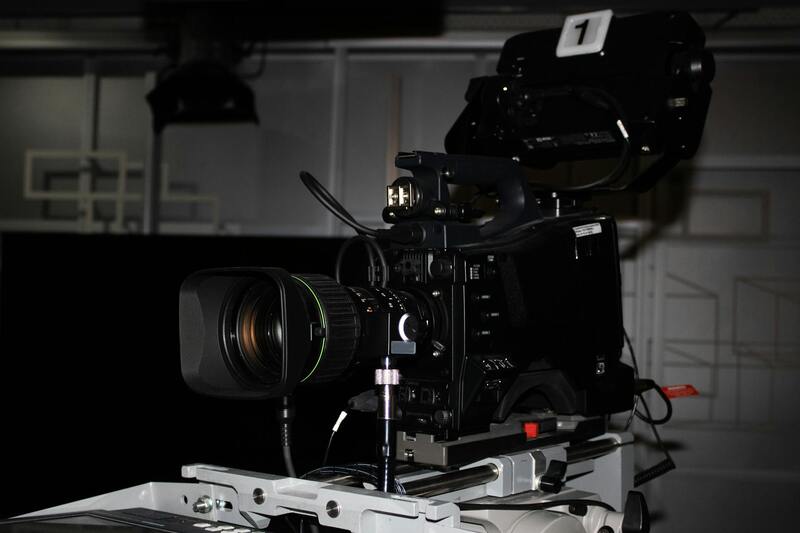
Simultaneous interpretation runs through the venue's or the AV company's interpretation system, with a booth, interpreter consoles and an infrared or RF distribution to headsets. Each language is a channel. The video team asks the AV vendor for a line-level output of each interpretation channel, in addition to the floor mix, and records them as separate tracks on the main recorder or on a dedicated multitrack. The conversation with the AV team about feeds, described in our guide to working with the venue AV team, needs to include the interpretation channels explicitly; they are not part of the standard board feed and the AV company will not offer them unprompted.
Points to settle before the event:
| Item | Decision |
|---|---|
| Which channels to record | Floor (original), English interpretation, Spanish interpretation; Portuguese if provided |
| How they arrive | Separate XLR or Dante channels to the video recorder; not a headset held to a microphone |
| Rights | Interpreters are usually contracted for live delivery only; recording and publishing their voice needs agreement and often an additional fee, settled with the interpretation vendor in advance |
| Labelling | Every track named by language and session in the recorder and in the edit |
| Sync | Interpretation runs a few seconds behind the floor; the edit will need to handle the offset when switching tracks |
Recorded interpretation is not broadcast quality; the interpreter is speaking under pressure and the booth microphone is not a studio. For a full session recording made available to staff or attendees it is entirely adequate and enormously cheaper than translation and re-voicing. For a public-facing recap, subtitles from a proper translation are the better route.
Recording so both versions can be cut
The multi-camera approach in our note on multi-camera coverage for a conference gives the editor angles; for a bilingual cut the editor also needs the audio choices. That means the floor mix, each interpretation channel and the camera scratch tracks all synced by timecode, plus a clean recording of the stage screen so slides can be replaced with the other language version in post if the client has them. Floor interviews and testimonials should be recorded in the speaker's own language, with the interviewer asking the question in that language; a Spanish answer to an English question is awkward to cut. Ask each interviewee at the start which language they prefer, and log it. The testimonial station process is in our guide to running an attendee testimonial station.
Captions, subtitles and graphics
Three different things, often confused:
- Captions transcribe the spoken language for accessibility, in the same language. Required or expected on most corporate video now. Automated captions in English are good; in Spanish, and especially for Miami's mix of accents and code-switching, they need human correction.
- Subtitles translate the spoken language into another. For a recap, English speech with Spanish subtitles and a Spanish version with English subtitles are the two standard deliverables. A translator, not a machine, for anything with a brand's name on it.
- Graphics: lower thirds, titles and section cards need to exist in both languages, with the layout tested for Spanish text, which runs 20 to 30 percent longer. The design rules in our note on lower thirds and on-screen graphics apply; build the templates with the longer language first.
Deliver captions and subtitles as separate files (SRT or VTT) alongside burned-in versions, so the client can load them on the platforms that support selectable tracks and use the burned-in version for social.
The bilingual recap
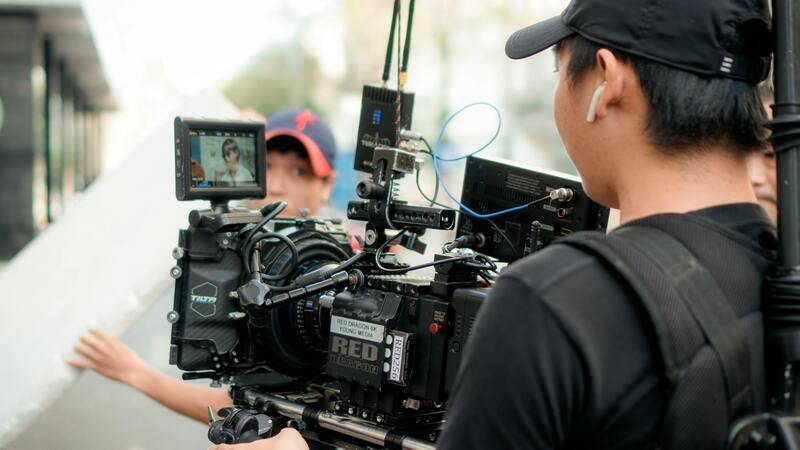
A recap that works in both languages is planned, not translated. The editor cuts a structure in which speech is short and visual sequences carry the story, so that the two language versions differ in voiceover, subtitles and graphics but not in picture. Interviews are chosen so that each version has native speakers in it rather than everything subtitled; a Spanish recap with three Spanish testimonials and one subtitled English executive feels made for its audience, and the reverse is true. Music, pacing and the picture edit are shared. The client approves one picture lock and two language passes, which is far cheaper than two edits.
For session recordings distributed internally, the practical deliverable is one video file per session with selectable audio tracks (floor, English, Spanish) and caption files per language. Most corporate video platforms support this; the file is built once.
Budget and timeline differences
Bilingual coverage adds a few lines rather than doubling the job. On the capture side: the interpretation channel recording (often nothing, if the recorder has spare inputs), the interpreters' recording rights fee, and bilingual crew for the floor interviews. On the post side: a translator for subtitles, human caption correction in the second language, a second graphics pass, and a language pass on the recap, typically a day or two beyond the single-language schedule. Session recordings with selectable tracks cost almost nothing extra once the tracks exist. What does cost money is discovering after the event that the Spanish sessions were not recorded with a usable audio source, and paying for transcription, translation and re-voicing to fix it. The plan is cheaper than the repair.
Bilingual event video from our team
We cover bilingual conferences in Miami as the normal case, not the exception. Our pre-event checklist with the AV vendor includes the interpretation channels and their recording rights, our recorders take each language as its own track, floor interviews are conducted in the speaker's language by bilingual crew, and our graphics templates are built for Spanish text lengths from the start. Recaps are cut as one picture lock with English and Spanish passes, captions are human-corrected in both languages, and session recordings ship with selectable audio and caption tracks. If your Miami event has a Spanish-speaking audience or Latin American partners, tell us at the briefing and the plan changes in the right places; start on the contact page, and the rest of our event coverage is described on the about page.